"Where there is no vision, the people perish: but he that keepeth the law, happy is he."
-- Proverbs 29:18, King James Bible (KJV)

Tuesday, December 02, 2014

Effective January 1, 2015 New VAT Rules in the European Union for Electronic Services, also eBooks, etc.

European Union Value Added Tax (VAT) Rules (and corresponding record keeping) for telecommunications, radio and TV broadcasting and electronic services supplied in the EU Member States change starting January 1, 2015.

Under the new rules, the location of the customer is determinative for the VAT applied.

For example, we today received an email notice from Amazon's Kindle Direct Publishing (KDP) about the new rules, which informed us, inter alia:
"On January 1, 2015, European Union (EU) tax laws regarding the taxation of digital products (including eBooks) will change: previously, Value Added Tax (VAT) was applied based on the seller’s country – as of January 1st, VAT will be applied based on the buyer’s country. As a result, starting on January 1st, KDP authors must set list prices to be inclusive of VAT.  We will also make a one-time adjustment for existing books published through KDP to move from VAT-exclusive list prices to list prices which include VAT. We'll put these changes into effect starting January 1st; you may always change your prices at any time, but you do not need to take any action unless you wish to do so."
Accordingly, one can see that the new rules have very broad implications.

See the European Commission website page on VAT on electronic services.

For practical aspects of implementing the new rules in daily business,
see Tax Briefing at Revenue.ie
and
Taxamo.



Friday, November 21, 2014

New Meta-Research Innovation Center at Stanford University to Study the Problem of Deficient Science Research and Optimize Practices

John P. A. Ioannidis at the Scientific American in Science Research Needs an Overhaul writes that he has co-founded a new center at Stanford University -- the Meta-Research Innovation Center at Stanford (METRICS) -- to deal with the costly problem that most mainstream research is wasted, for example, 85% of medical research, according to The Lancet. He writes that the METRICS center:
"[W]ill seek to study research practices and how these can be optimized. It will examine the best means of designing research protocols and agendas to ensure that the results are not dead ends but rather that they pave a path forward. The center will do so by exploring what are the best ways to make scientific investigation more reliable and efficient."
We applaud this development.

We have been confronted for years by gullible, uninformed, and opinionated people in and out of science proclaiming the near infallibility of mainstream ideas and research methods.

Having taught research ourselves at the university level, we know from experience, of course, that exactly the opposite is true.

Most of what is researched in science and published as a result is a costly waste of time and often leads science in the wrong direction.

One main reason for these follies of "scientific research", as we have written time and time again, is that science in the past has been predominantly "authority-based", whereas "evidence-based" research must be given priority.

Outdated memes must be abandoned.

That is our quest.

Tuesday, November 18, 2014

Common Sense and Innovation Prevail in Ultramercial III: Is Federal Circuit Finally "Getting" the Supreme Court Patent Decision Reasoning in Alice etc.?

As written by James M. Singer, Fox Rothschild LLP, at Mondaq.com,

Federal Circuit Reverses Course In Ultramercial v. Hulu;
Finds Method Of Delivering Advertisements To Be An Abstract Idea
.

At Patently-O, Dennis Crouch posts on the Federal Circuit decision in

"Ultramercial III" at

Novelty in Implementation of an Abstract Idea Insufficient to Overcome Alice.

Daniel Nazer correctly cheers at the Electronic Frontier Foundation (EFF) in

Victory! Court Finally Throws Out Ultramercial’s Infamous Patent on Advertising on the Internet that:

"This is a big victory for common sense and innovation."

Absolutely.

Due to the recent U.S. Supreme Court decision in Alice Corp. v. CLS Bank Int'l, 573 U. S. ___ (2014), the "Ultramercial III" case referred to above finds the Federal Circuit NECESSARILY reversing its path on a case in which it was twice previously and horrendously on the wrong side of understanding patent law.

Judge Lourie, who wrote the majority opinion in the latest and last Ultramercial decision,  reluctantly overturned the sinking ship of previous Federal Circuit patent decisions, a general patent-friendly reluctance he previously voiced in a previous Ultramercial concurrence:
"It is our obligation to attempt to follow the Supreme Court’s guidance in Mayo rather than to set forth our own independent views, however valid we may consider them to be...."
Judge Lourie -- a 1970 Temple Law School graduate -- will be 80 in January and it is surely high time that not only he but all other judges on the Federal Circuit acknowledge that they must follow U.S. Supreme Court precedents, a general jurisprudential and hierarchical truth presumably learned by every first-year law student in all law schools. That this kind of "sour grapes" judicial thinking about precedents still exists in higher court opinions among those who should know better is astonishing.

Judge Haldane Robert Mayer (J.D. 1971, Marshall-Wythe School of Law of The College of William and Mary) in concurring writes in his opinion what we consider to be the future of the patent law world, that:
"The Supreme Court has taken up four subject matter eligibility challenges in as many years, endeavoring to right the ship and return the nation’s patent system to its constitutional moorings.  See Alice, 134 S. Ct. at 2357 (concluding that “generic computer implementation” did not bring claims within section 101); Ass’n for Molecular Pathology v. Myriad Genetics, Inc., 133 S. Ct. 2107, 2117–18 (2013) (“Myriad”) (concluding that claims covering naturally-occurring DNA segments were patent ineligible); Mayo, 132 S. Ct. at 1302 (concluding that claims describing a natural law but “add[ing] nothing of significance” to that law fell outside section 101); Bilski, 561 U.S. at 611 (concluding that a method for hedging against economic risk was a patent ineligible abstract idea).  Rejecting efforts to treat section 101 as a “dead letter,” Mayo, 132 S. Ct. at 1303, the Court has unequivocally repudiated the overly expansive approach to patent eligibility that followed in the wake of State Street, 149 F.3d at 1373.  See Bilski, 561 U.S. at 659 (Breyer, J., concurring in the judgment) (explaining that State Street “preceded the granting of patents that ranged from the somewhat ridiculous to the truly absurd” (citations and internal quotation marks omitted))."
That is correct.

Slowly, but surely, the sinking patent ship is being righted, even if it is against the reluctance of some Federal Circuit judges to follow judicial precedents and against the myopic reluctance of many legal beagles -- just read the comments at Patently-O -- to understand the enormity and importance of swinging the patent pendelum in exactly the oppposite direction of the last 60 years.

°°°°°°°°°°°°°°°°°°°°°°°°°°°°°°°°°°°°°°°°°°

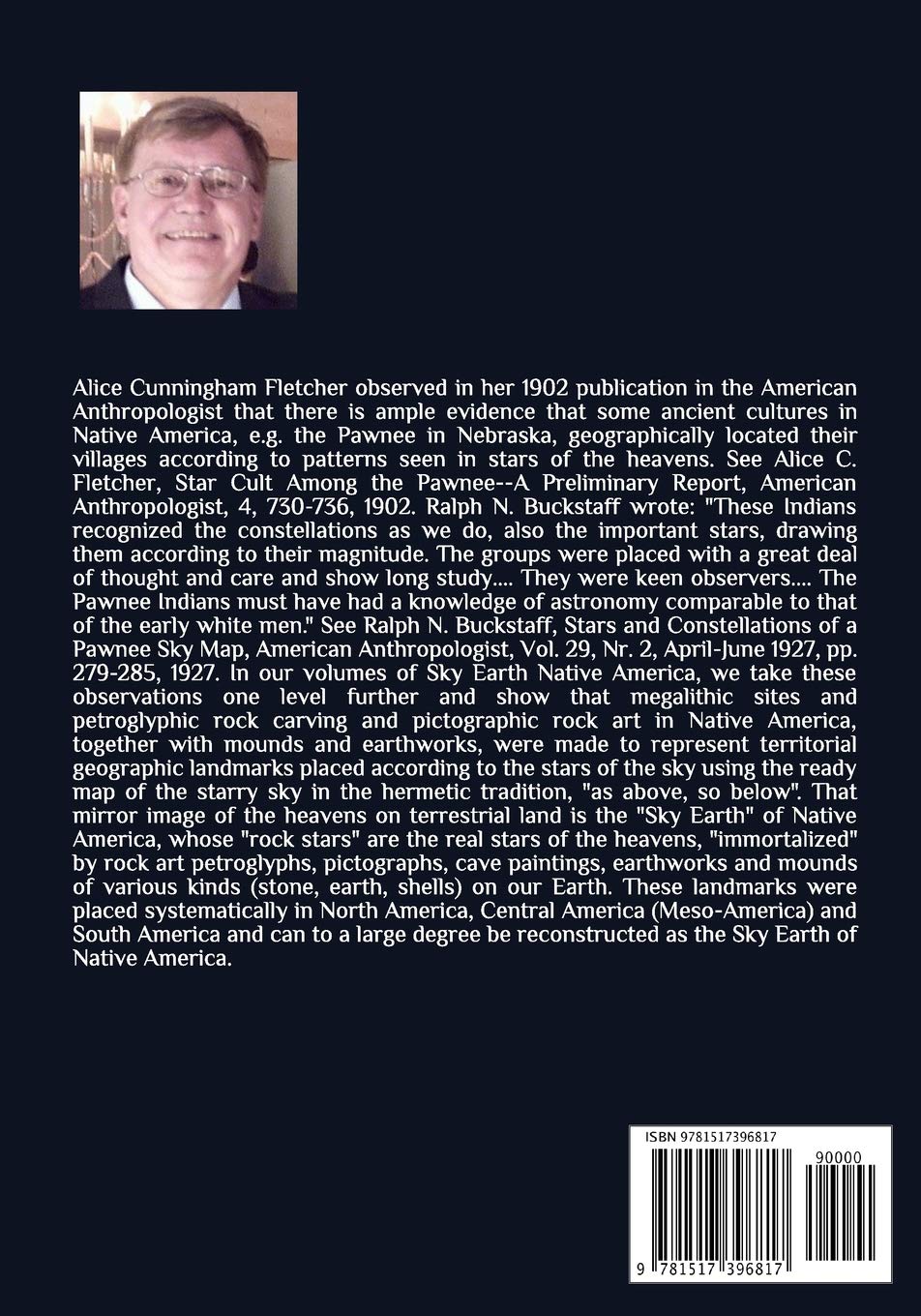
Sky Earth Native America -- in Two Volumes
Native American Rock Art Petroglyphs Pictographs
Cave Paintings Earthworks & Mounds
Deciphered as Land Survey & Astronomy by Andis Kaulins

paperbacks in color print
Volume 1, 2nd Edition, 266 pages

ISBN: 1517396816 / 9781517396817
Volume 2, 2nd Edition, 262 pages
ISBN: 1517396832 / 9781517396831

Sky Earth Native America Volume 1-----------Sky Earth Native America Volume 2
by Andis Kaulins J.D. Stanford                                         
by Andis Kaulins J.D. Stanford
(front cover(s))  
 
  ------

(back cover with a photograph of the author and book absract text)