"Where there is no vision, the people perish: but he that keepeth the law, happy is he."
-- Proverbs 29:18, King James Bible (KJV)

Wednesday, October 28, 2015

The Changing Nature of Law Practice: Commercial Free Speech ala Citizens United and Law Advertising by the Legal Profession ala Bates

We are often decades ahead of the trend, and this -- again -- is one such case.

During our law teaching tenure at the University of Trier Law School, our favorite case for inclusion in law school final examinations was Bates v. State Bar of Arizona, 433 U.S. 350 (1977), a decision in which the United States Supreme Court upheld the Constitutional right of attorneys to advertise their professional legal services.

We taught that Bates was a more important case than people thought. Indeed, Bates was a forerunner of the "commercial free speech" championed by the U.S. Supreme Court in Citizens United v. Federal Election Commission. For a modern take, see Apt46.net.

As can be read at the American Bar Association in Lawyer Advertising and Solicitation Chapter from Lawyer Advertising at the Crossroads, monopolistically-oriented local State bar associations in past years have had serious difficulties in abiding by the law as set out in Bates.

The controversy centering on "legal advertising" by attorneys is handled by Jacob Gershman at the Wall Street Journal Law Blog in
Need a Lawyer? Legal Ads Are Proliferating, Says New Report

where he refers to an article by Robert Trigaux in the Tampa Bay Times in
Tampa Bay leads the nation in number of lawyer ads on TV

and also to an "On the Case" blog posting by Alison Frankel of Reuters at
In defense of trial lawyers advertising for clients.

This entire matter has a much larger component which points to the changing nature of law practice in general, as discussed by Renee Newman Knake in her Democratizing the Delivery of Legal Services, where she writes in conclusion:
"This Article is the first to identify a jurisprudential thread of cases supporting the corporation’s First Amendment right to deliver legal services through an arrangement involving ownership of or investment in a law practice, notwithstanding bar regulators' historic distaste for such relationships. Proponents of corporate law practice ownership and investment maintain that this will bring affordable representation to the general population and address the well-documented, unmet need for lawyers. Opponents counter that corporate involvement will exacerbate the already poor reputation of lawyers, undermine lawyer independence, and subject lawyers to insurmountable conflicts of interests driven by a profit motive instead of service to the client. Neither side, however, seems to fully appreciate the First Amendment interests at stake in the delivery of legal services."
Given the recent precedent of Citizens United in firmly establishing "commercial free speech" as a constitutional right, many of the special rules and regulations of local State bars that suppress attorney free speech are clearly unconstitutional, regardless of the motives that lie behind them.

Advertising by the legal profession is thus likely to increase in coming years.

Wednesday, October 21, 2015

People's Confidence in Global Governance Lost - David Brooks at the New York Times Looks at Emerging Outsiders

From one point of view, politics is a branch of "the law" in the broader sense, since it has to do with governance, which always involves commandments, rules, orders, "have to's" and/or systems of law and decision-making.

The erosion of people's confidence in global governance is thus part of the breakdown of existing systems of "law and order".

David Brooks at the New York Times looks at

Enter the Age of the Outsiders

Hat tip to CaryGEE.

Saturday, October 17, 2015

Google Book Scanning is Fair Use: 2nd Circuit Court of Appeals Decision Supports Reasoning Presented on LawPundit 10 Years Ago

It took the legal system 10 years, but they finally got it right.

Book scanning as done by Google Books, formerly Google Print (now part of Alphabet Inc.) is "fair use" in the eyes of the law according to a decision of the Second Circuit Court of Appeals issued yesterday (see Reuters), October 16, 2015, in the case Authors Guild, Inc. v., Google, Inc., Docket No. 13-4829-cv.

The Circuit Court judges on the 2nd Circuit panel for the present decision were:
Pierre N. Leval (note: Harvard Law School graduate)
José A. Cabranes (note: Yale Law School graduate)
Barrington D. Parker (note: Yale Law School graduate)
Judge Leval wrote the opinion. These are the kinds of significant and correctly decided judicial cases that result when top legal minds are at work.
The .pdf of the court decision is downloadable here via this link.

This Circuit Court decision ends more than 10 years of litigation, whereby the class certification was rightly rejected in 2013 by the 2nd Circuit and the case remanded for consideration of Google's fair use defense, a defense upheld at the District Court level by Judge Denny Chin (sitting by designation) and now upheld at the Circuit Court level by a 3-judge panel.

See generally for reports covering yesterday's decision:
_________

Our track record in correctly calling the ultimate resolution of important legal issues in the intellectual copyright field is nearly flawless (just look at patents) and, as here, we are usually 10 or more years ahead of actual developments.

That applies not just to legal issues in general but also to our publications about the history of civilization, linguistics, ancient astronomy and archaeology, where our basic conclusions will be substantiated in coming years. We write for the very top echelons, and that is only a handful of people, if they can be found.

As regards the Artists Guild vs. Google, we wrote more than ten years ago in various LawPundit postings as follows:

In Author's Guild v. Google Print (GooglePrint) we quoted Larry Lessig:
"Lawrence Lessig at Lessig Blog comments:

"So too should common sense revolt at the claims of this law suit. I’m an academic, so this is a bit biased, but: Google Print could be the most important contribution to the spread of knowledge since Jefferson dreamed of national libraries. It is an astonishing opportunity to revive our cultural past, and make it accessible."
In Google Print or Library – Who is the "Copier" according to Law?
we wrote inter alia:
"We remain convinced that what Google is doing - or planning to do, by offering snippets of an existing database for its search engine, is permissible transformative use - and thus fair use under § 107 of the U.S. Copyright Act.
In Transformative Use Justifies GooglePrint Scans of Entire Books as Fair Use we concluded inter alia:
"[I]f the judges find against Google Print [now "Google Books"], they basically have to invalidate the entire process of search engine servers storing masses of online copyrighted material, the corpus of which they access in order to provide useful search results in “snippet” form. A decision for the Author’s Guild would simply lead to internet search chaos, and that is not the role of the courts. They have to apply the law sensibly. Hence, we think Google Print will win."
Of course, that is not all. One should read the above postings in full for a complete picture of the applicable legal arguments.

See also our Twenty Key Questions for Author’s Guild v. Google way back when.


°°°°°°°°°°°°°°°°°°°°°°°°°°°°°°°°°°°°°°°°°°

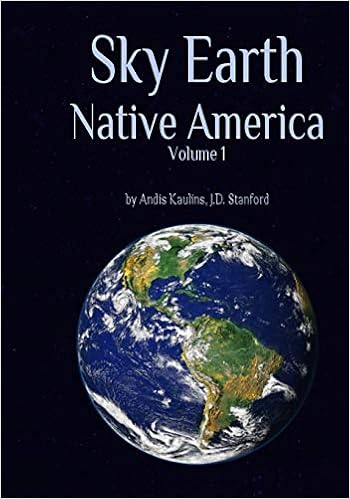
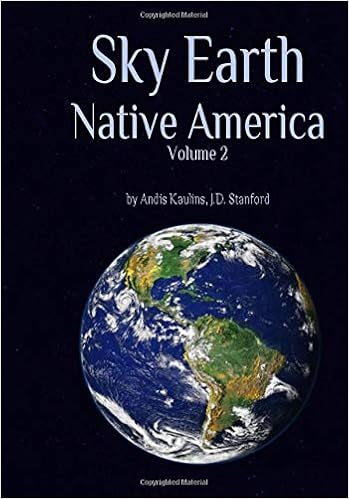
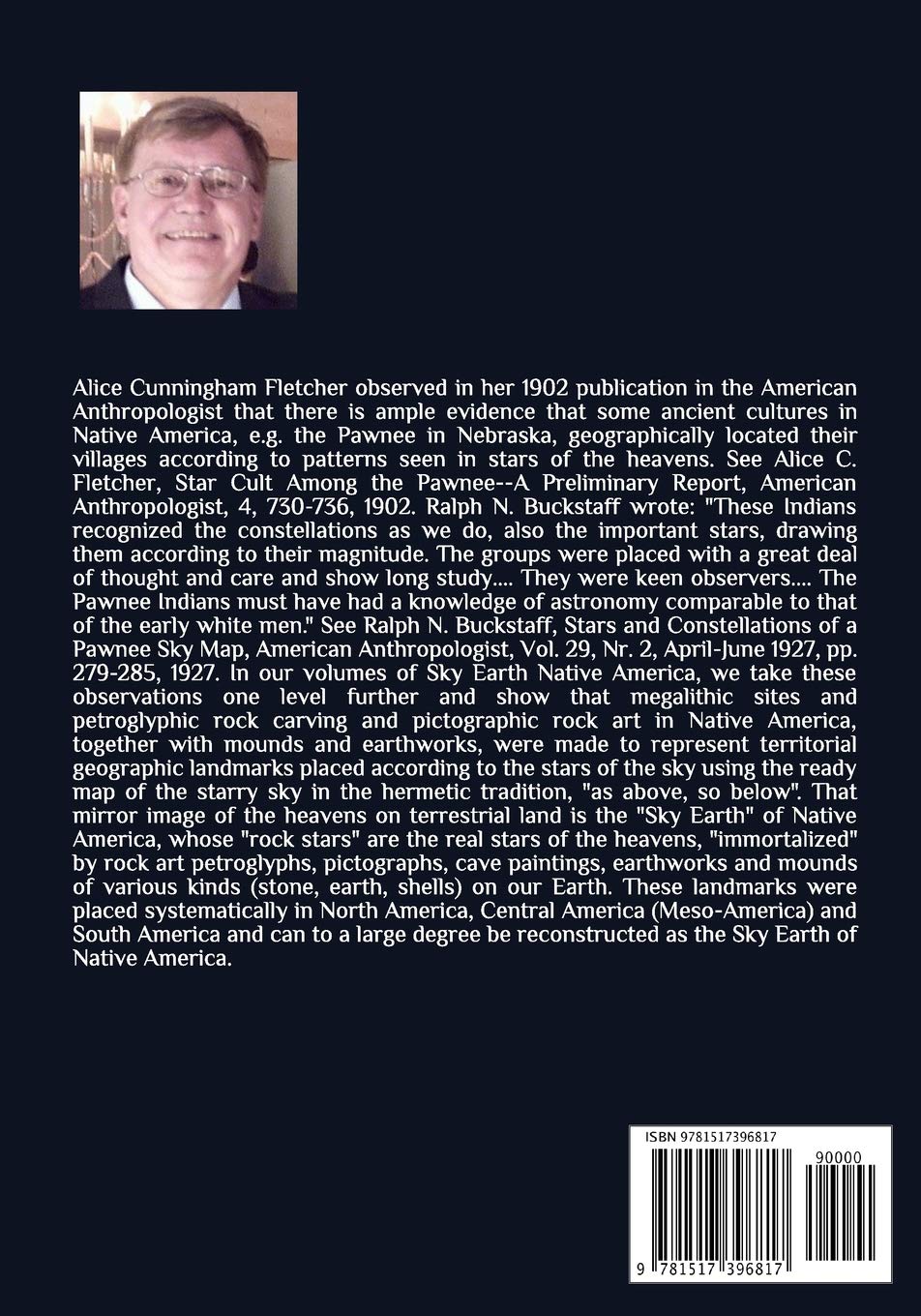
Sky Earth Native America -- in Two Volumes
Native American Rock Art Petroglyphs Pictographs
Cave Paintings Earthworks & Mounds
Deciphered as Land Survey & Astronomy by Andis Kaulins

paperbacks in color print
Volume 1, 2nd Edition, 266 pages

ISBN: 1517396816 / 9781517396817
Volume 2, 2nd Edition, 262 pages
ISBN: 1517396832 / 9781517396831

Sky Earth Native America Volume 1-----------Sky Earth Native America Volume 2
by Andis Kaulins J.D. Stanford                                         
by Andis Kaulins J.D. Stanford
(front cover(s))  
 
  ------

(back cover with a photograph of the author and book absract text)